In South Africa, alcohol retail does not always look like a traditional store. A large share of purchasing happens through informal formats such as township outlets, barred counters, spaza-style shops and hole-in-the-wall stores, where space is limited, transactions are fast and visibility has to work harder. The challenge was to create a dedicated POS approach for this environment rather than adapting solutions designed for conventional retail.
We developed one locally grounded framework that could work across Amstel, Strongbow and Amarula, built around three stages: attract attention, influence the purchase and create reasons to come back. Every concept was designed to be space-aware, durable, visually assertive and functional without relying on electricity, reflecting the realities of fast, verbal and loyalty-led shopping in these outlets.
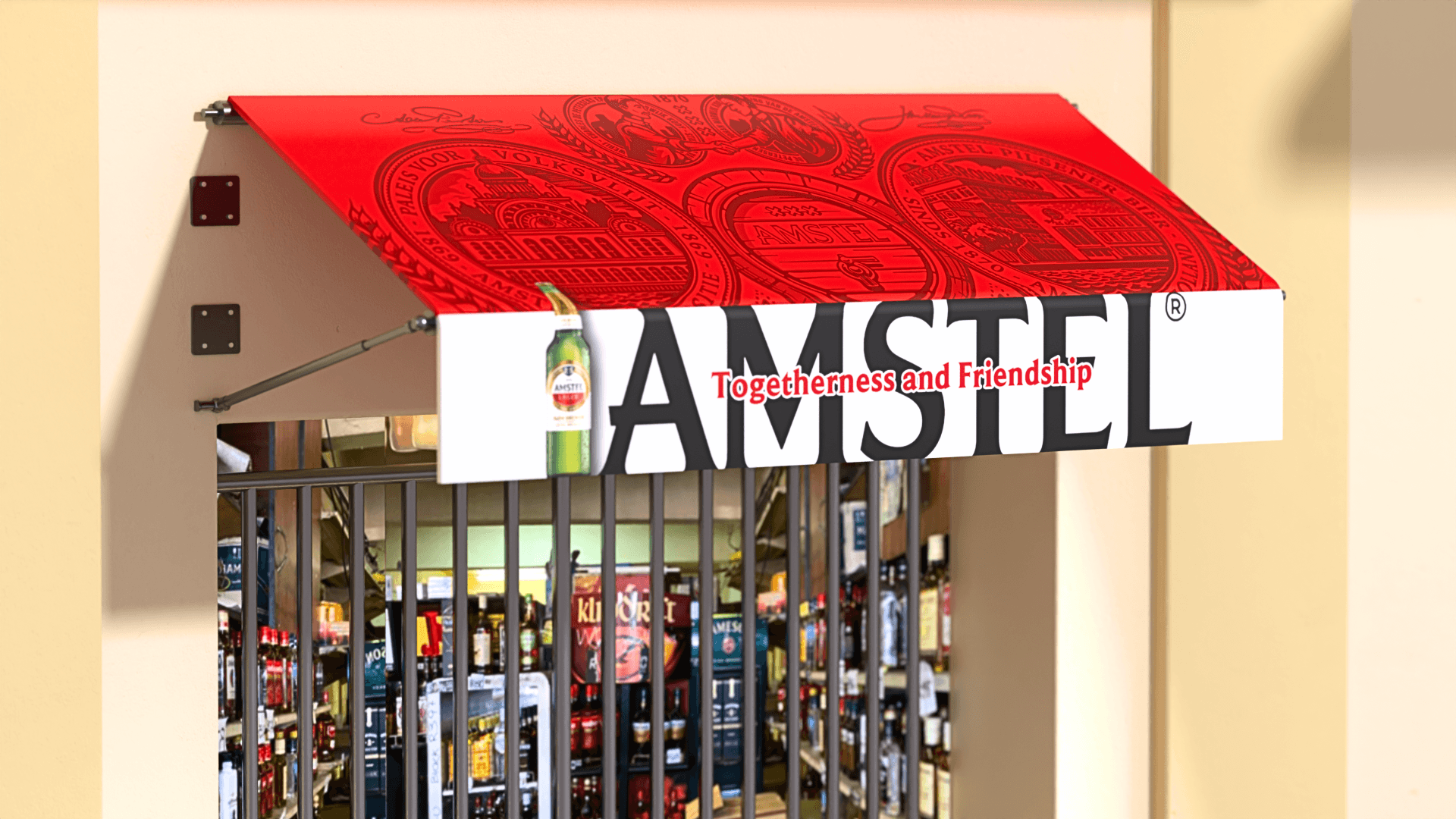
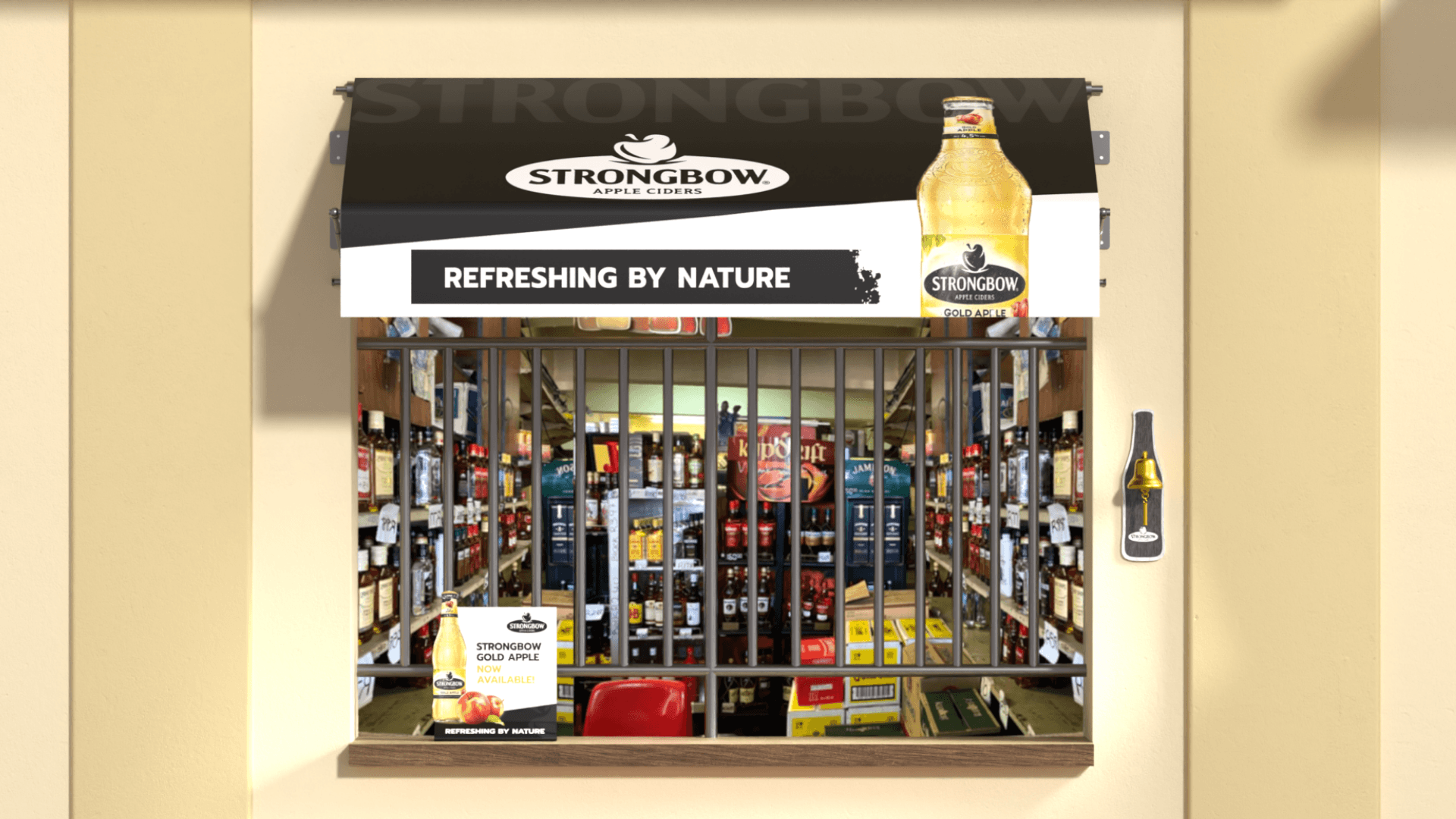
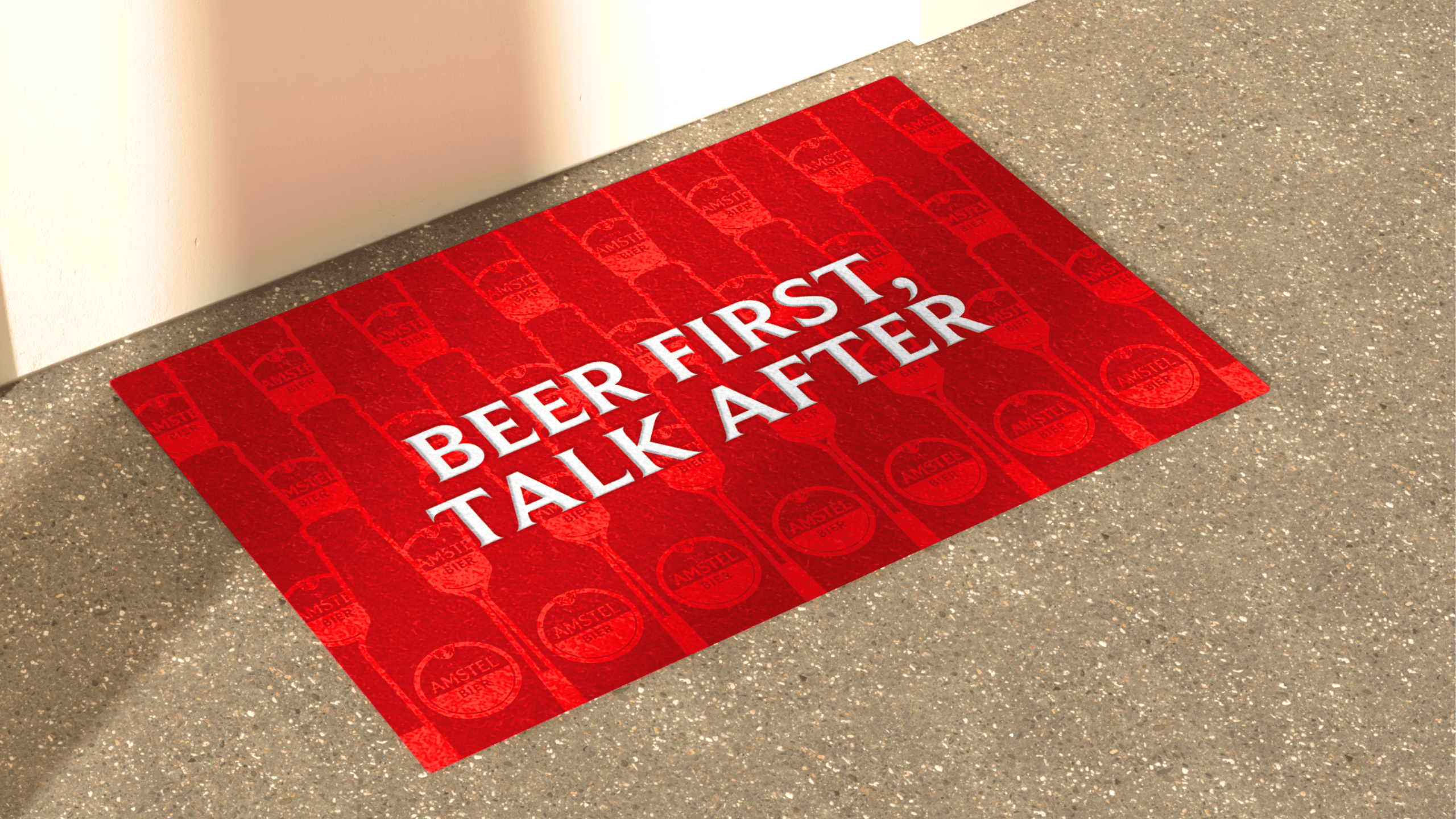
The same core tools were then adapted to each brand. Foldable canopies turn the storefront into visible branded territory, bells create a simple service or loyalty ritual, bar talkers attach directly to security bars, and slide trays turn the cash handover itself into a branded touchpoint. Counter communication, shelf tools and practical GWPs such as bottle openers and buckets extend the system into purchase and consumption moments.
The result is a portfolio approach built specifically for the South African market. Rather than forcing global POS formats into a local context, the system starts with how people already shop and builds the brands around those behaviours, creating stronger visibility, more useful interactions and more meaningful reasons for repeat purchase.
In South Africa, alcohol retail does not always look like a traditional store. A large share of purchasing happens through informal formats such as township outlets, barred counters, spaza-style shops and hole-in-the-wall stores, where space is limited, transactions are fast and visibility has to work harder. The challenge was to create a dedicated POS approach for this environment rather than adapting solutions designed for conventional retail.
We developed one locally grounded framework that could work across Amstel, Strongbow and Amarula, built around three stages: attract attention, influence the purchase and create reasons to come back. Every concept was designed to be space-aware, durable, visually assertive and functional without relying on electricity, reflecting the realities of fast, verbal and loyalty-led shopping in these outlets.
The same core tools were then adapted to each brand. Foldable canopies turn the storefront into visible branded territory, bells create a simple service or loyalty ritual, bar talkers attach directly to security bars, and slide trays turn the cash handover itself into a branded touchpoint. Counter communication, shelf tools and practical GWPs such as bottle openers and buckets extend the system into purchase and consumption moments.
The result is a portfolio approach built specifically for the South African market. Rather than forcing global POS formats into a local context, the system starts with how people already shop and builds the brands around those behaviours, creating stronger visibility, more useful interactions and more meaningful reasons for repeat purchase.
In South Africa, alcohol retail does not always look like a traditional store. A large share of purchasing happens through informal formats such as township outlets, barred counters, spaza-style shops and hole-in-the-wall stores, where space is limited, transactions are fast and visibility has to work harder. The challenge was to create a dedicated POS approach for this environment rather than adapting solutions designed for conventional retail.
We developed one locally grounded framework that could work across Amstel, Strongbow and Amarula, built around three stages: attract attention, influence the purchase and create reasons to come back. Every concept was designed to be space-aware, durable, visually assertive and functional without relying on electricity, reflecting the realities of fast, verbal and loyalty-led shopping in these outlets.
The same core tools were then adapted to each brand. Foldable canopies turn the storefront into visible branded territory, bells create a simple service or loyalty ritual, bar talkers attach directly to security bars, and slide trays turn the cash handover itself into a branded touchpoint. Counter communication, shelf tools and practical GWPs such as bottle openers and buckets extend the system into purchase and consumption moments.
The result is a portfolio approach built specifically for the South African market. Rather than forcing global POS formats into a local context, the system starts with how people already shop and builds the brands around those behaviours, creating stronger visibility, more useful interactions and more meaningful reasons for repeat purchase.
In South Africa, alcohol retail does not always look like a traditional store. A large share of purchasing happens through informal formats such as township outlets, barred counters, spaza-style shops and hole-in-the-wall stores, where space is limited, transactions are fast and visibility has to work harder. The challenge was to create a dedicated POS approach for this environment rather than adapting solutions designed for conventional retail.
We developed one locally grounded framework that could work across Amstel, Strongbow and Amarula, built around three stages: attract attention, influence the purchase and create reasons to come back. Every concept was designed to be space-aware, durable, visually assertive and functional without relying on electricity, reflecting the realities of fast, verbal and loyalty-led shopping in these outlets.
The same core tools were then adapted to each brand. Foldable canopies turn the storefront into visible branded territory, bells create a simple service or loyalty ritual, bar talkers attach directly to security bars, and slide trays turn the cash handover itself into a branded touchpoint. Counter communication, shelf tools and practical GWPs such as bottle openers and buckets extend the system into purchase and consumption moments.
The result is a portfolio approach built specifically for the South African market. Rather than forcing global POS formats into a local context, the system starts with how people already shop and builds the brands around those behaviours, creating stronger visibility, more useful interactions and more meaningful reasons for repeat purchase.